
What can old websites tell us about today’s AI debate?
Professor Rasmus Helles studies how digital technology affects culture and society. Archived websites allow him to trace the spread of tracking and changes in the way we talk about IT.
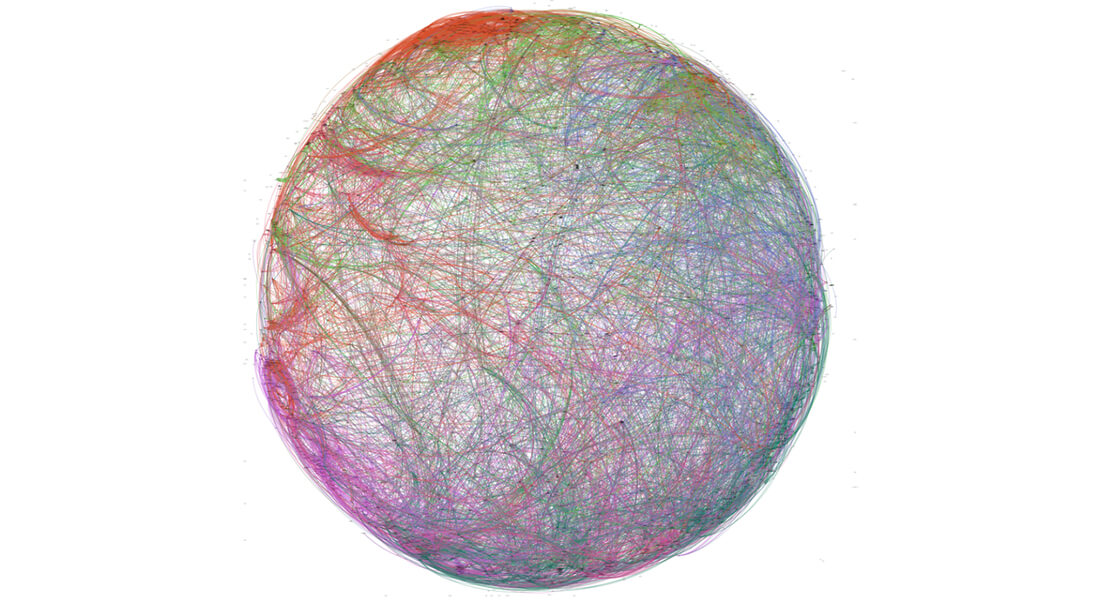
Together with colleagues, Rasmus Helles has collected millions of archived pages from sources including municipal websites in Denmark, Norway and Sweden. The material spans almost 30 years and makes it possible to study how municipalities’ language about IT, among other things, has changed.
In one of his analyses, he examines wording that describes IT systems as though they can act or make demands of their own. He believes this way of talking about technology also matters for today’s discussion of AI.
“I think many of the often far-reaching ideas about what AI can do that shape today’s debate have their roots in earlier discussions about IT,” he says.
AI as a tool and a subject of research
Rasmus Helles uses AI for tasks including coding and working with large amounts of data. It can reduce work that once took many months to a matter of weeks. But neither the size of the material nor the speed is what interests him most.
“What’s interesting is that we can identify patterns across millions of pages and then zoom in on the handful of pages or the brief period where we can observe a change,” he says.
AI is also a subject of Rasmus Helles’ research. In a Nordic project, he is investigating how the technology is changing the way we search the web. He is currently looking at how Google’s AI-generated summaries of search results vary when people search for the same thing from different parts of the world and in different languages.
But the faster pace of research also calls for careful thought, Rasmus Helles believes.
“AI can make empirical testing move faster than methodological and theoretical reflection. If that happens, we end up with fast food instead of the slow food that has always been a hallmark of good research,” he says.
Who put tracking on the website?
Another part of Rasmus Helles’ research concerns tracking. Major tech companies have built businesses around collecting information about our digital activity. But he argues that we should also discuss the responsibility of the companies that developed the websites and apps where tracking takes place.
“The tech giants did not actually install the tracking in the digital products we use. The Danish companies that developed those products did, often because they had a financial interest in doing so. In my view, we haven’t talked enough about that responsibility,” he says.
Rasmus Helles uses archived websites to trace how tracking has spread over the past 25 years and how people have written about IT during the same period. In his inaugural lecture on 9 October, he will explore why we as a society are often slow to recognise the effects of digital infrastructures on our lives.
“Tracking had become commonplace long before anyone wrote the first draft of the GDPR. With the development of AI, we find ourselves in a new version of the same situation, but this time the technology and the critical discussion are developing in parallel. Humanities research into digital infrastructures and communication makes an important contribution to that discussion,” he says.
Contact
Rasmus Helles
Professor
Email: rashel@hum.ku.dk
Phone: +45 35 32 91 87
Cecilie Rosenkvist Jensen
Communications adviser, Faculty of Humanities
Email: rosenkvist@adm.ku.dk
Phone: +45 23 64 95 69